Transportation · Riders & Drivers · Pittsburgh
Rideshare vs. Cabs in 2026: Who's Actually Cheaper — and Why More Riders Are Rethinking Both
The app says one price, the meter says another, and half the time they've swapped places since last week. Here's what a driver sees — and the option neither one puts on your screen.
I hear the same question three or four times a week from the seat up front: "Is this even cheaper than a cab anymore?" Usually it's someone staring at a surge number on their phone, deciding whether to eat it or wait it out. A few years ago nobody asked. Rideshare was just obviously cheaper. In 2026, it's a real question — and the honest answer is: it depends on the exact minute you're standing there.
Let me walk through what's actually going on, because there's more to it than "apps good, cabs bad," and there's a third option most people forget they have.
The short answer
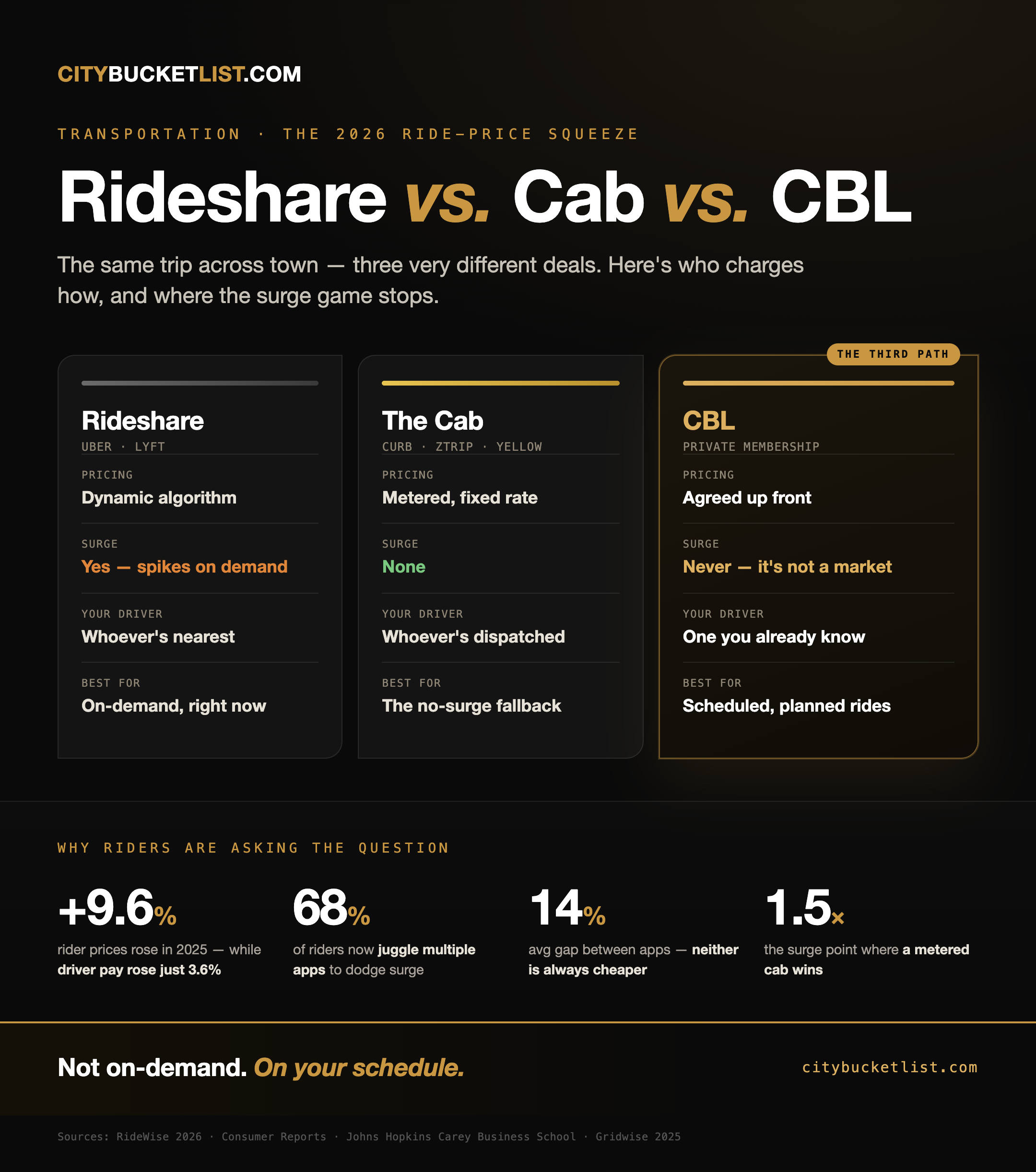
Most of the time, on a normal Tuesday, an Uber or Lyft still comes in cheaper than a metered taxi — the comparison guides put it somewhere around 20–40% cheaper during standard pricing.
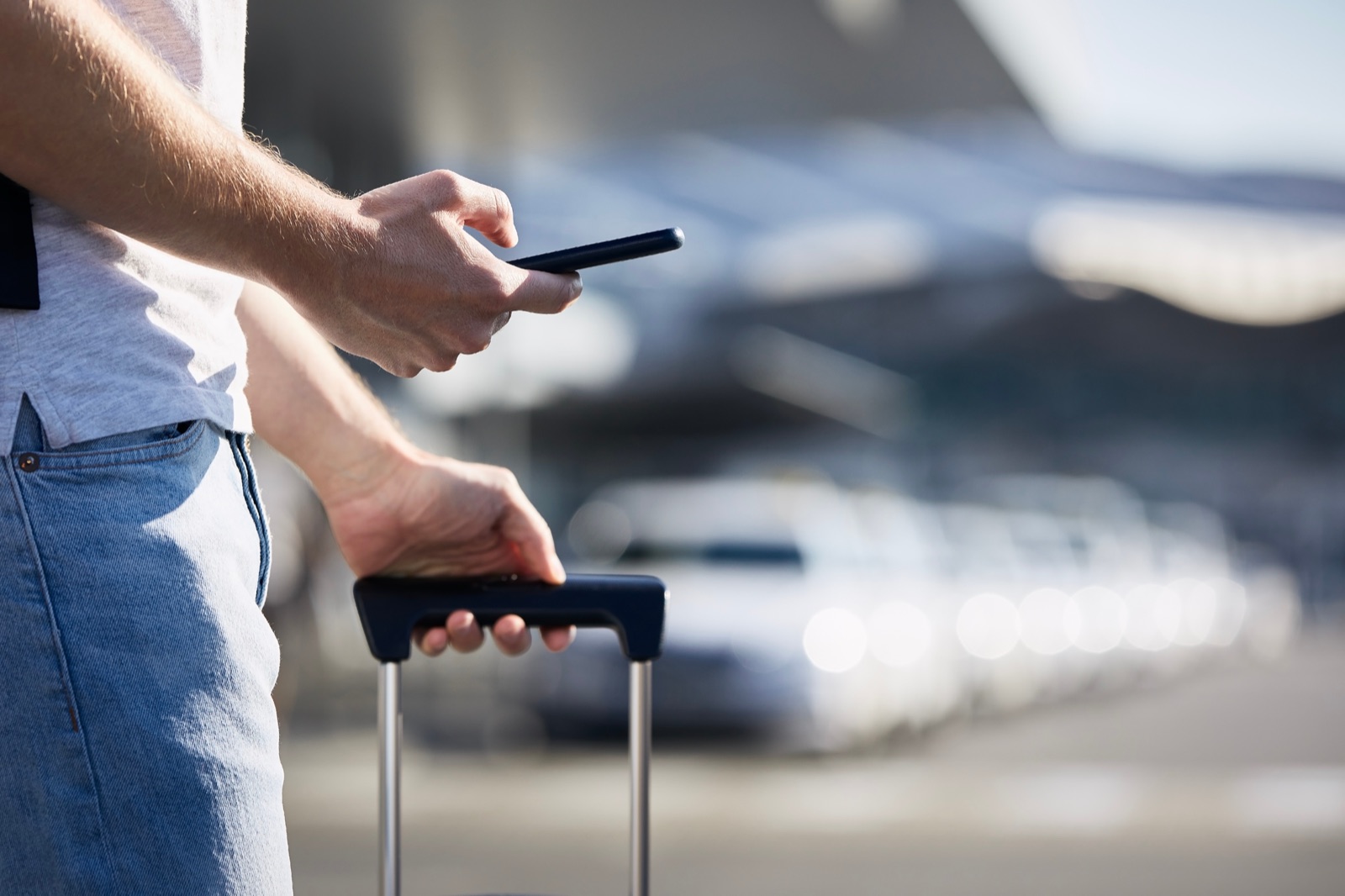
The catch is the word standard. The moment demand spikes — rush hour, bad weather, a Pens game letting out, a Sunday-night crush at the airport — the app's price climbs and the cab's doesn't. Once surge crosses roughly 1.5x, a metered cab at its fixed rate frequently wins. Airports are the classic trap: during peak travel windows, surged rideshare routinely blows past a flat cab rate.
So it's not that one is always cheaper. It's that rideshare is cheaper when it's calm and more expensive exactly when you need it most. Riders have started to feel that, and it's why the question keeps coming up.
Why it feels worse than it used to
It's not your imagination. In 2025, average rider prices on the big apps rose about 9.6%, while average driver pay per hour rose only 3.6%, according to ride-industry data firm Gridwise. Riders are paying more, drivers are keeping less, and the gap in the middle is the story of the last couple of years.
It's not just supply and demand anymore
Here's the part that surprises people. Consumer Reports ran an investigation in 2025 after complaints that two riders could get very different quotes for the same trip within minutes of each other — and raised the concern that the apps may price partly on what the algorithm thinks you'll pay, not purely on supply and demand.
A Johns Hopkins Carey Business School study found Uber and Lyft prices for the same ride differ by about 14% on average, and neither app is consistently cheaper — yet only about 16% of riders bother to check both. The riders who do check both, plus a cab app, save real money: comparing before you book runs $6–$12 a trip on average, and by 2026 roughly 68% of regular riders keep more than one app on their phone.
Translation: the game has quietly turned into comparison shopping every single ride. That's a lot of thumb-work for a trip across town.
The cab comeback
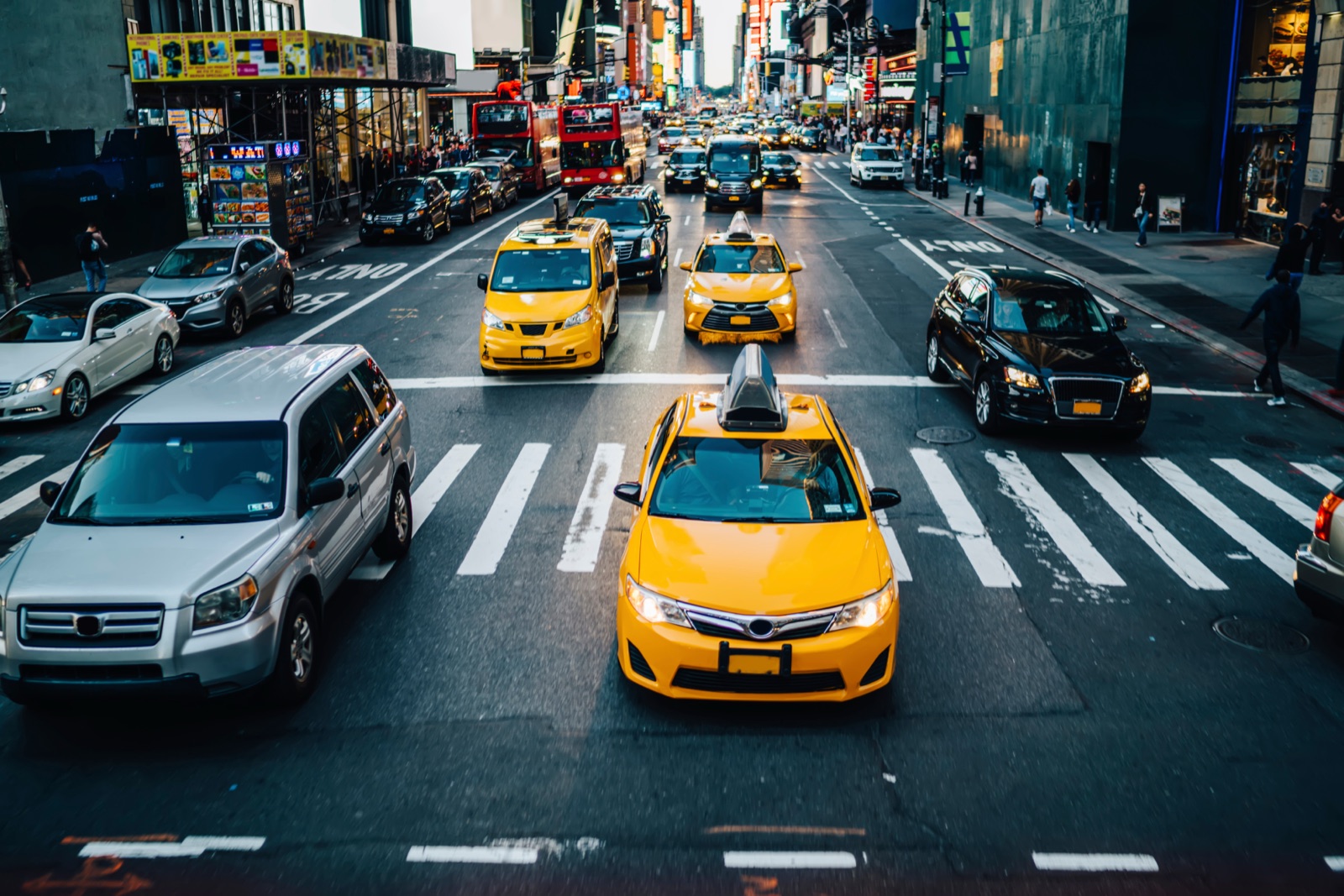
This is where the taxi quietly climbed back into the conversation. Modern cab apps — Curb nationally, and the app-based fleets that replaced the old Yellow Cab in a lot of cities — put a car on your phone the same way, but at a metered rate with no surge. No-surge is their whole pitch, and on a high-demand night it's a genuinely strong one. The trade-off is availability and, sometimes, the wait — but the price you're quoted is the price.
What both the meter and the app leave off your screen
Here's the option that never shows up when you're standing on the curb toggling between apps: you don't have to play the surge game at all.
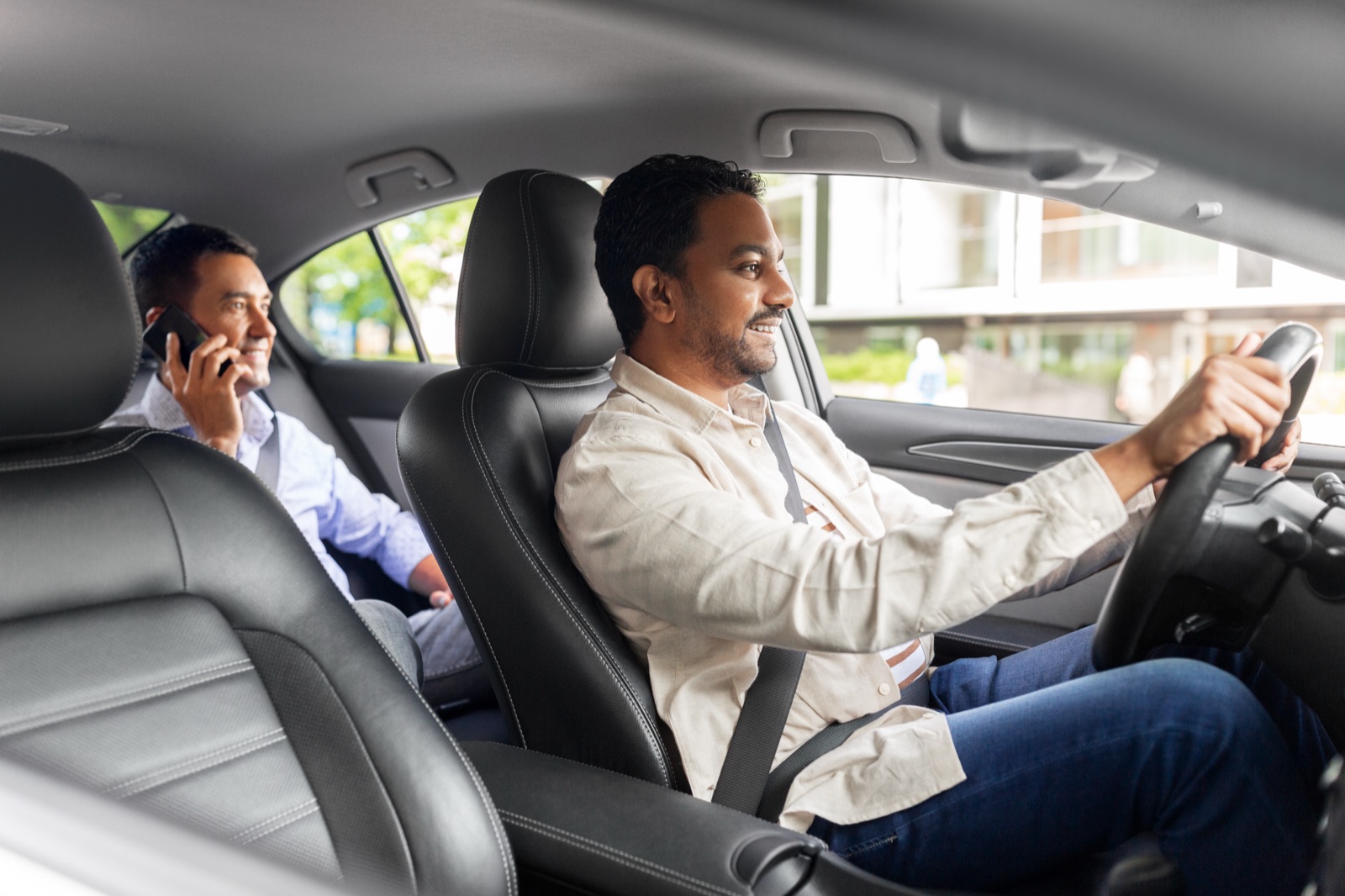
That's the whole idea behind what we do at CityBucketList. CBL isn't an app you hail — it's a membership, and the rides are scheduled, by invitation, with a driver you already know. You set the pickup ahead of time. You know the driver. There's no surge, no mystery algorithm, no roulette — because it isn't a marketplace bidding your ride up in real time. It's your driver, on your schedule, at a price you agreed to before you got in.
That's not a knock on the apps or the cabs — they're built for on-demand, spur-of-the-moment, "I need a car right now." CBL is built for the opposite: the airport run you already know is Friday at 5, the standing Tuesday appointment, the night out you planned on Monday. For those trips — the ones you can see coming — a scheduled ride with someone you trust beats rolling the dice on a surge number every time.
Not on-demand. On your schedule. Different tool for a different job.
Drivers: this is the opening
If you're the one behind the wheel, you already know the other half of that Gridwise number. Riders paid about 9.6% more in 2025; drivers earned about 3.6% more. The difference didn't disappear — it went to the platform. Every surged fare a rider grumbles about, the driver saw maybe a third of.
CBL is built to flip that math. The Private Membership is a flat $19.99 a month — no per-ride commission, no cut of your fare. You build your own book of private, scheduled riders, you set a fair price you both agree on up front, and you keep it. That means on the trips that matter you can come in under a surged app fare and under a cab meter — and still take home more per ride than the app would ever hand you, because nobody's skimming the middle.
It's not about chasing pings across town. It's a private, scheduled ride service you actually own — the airport regulars, the standing weekly appointments, the riders who'd rather text their driver than gamble on a screen. Rideshare and cabs are the on-demand tools. This is the one where the driver builds something that's theirs.
This isn't just a Pittsburgh story
The surge-vs-meter squeeze is playing out in every city — only the names change. Curb, Flywheel, zTrip, the local Yellow successor, whatever the town calls it. That's what makes this a piece we can run city by city, each one told by a real independent driver in that market: same question, local answer.
Sources: RideWise 2026 · Consumer Reports · Johns Hopkins Carey Business School · Gridwise 2025.